In the digital age, enterprises that fail to adopt artificial intelligence (AI) may face declining competitiveness. From the customer perspective, what service highlights can enterprises that integrate AI provide?
As AI technology accelerates, AI tools have become one of the key instruments for enterprise transformation. In the eyes of general consumers or business customers, can enterprises that adopt AI provide better, more valuable services?
From the Customer Perspective: Three Major Highlights of Enterprise AI Adoption
1. 24/7 On-Demand Service, Dramatically Enhanced Convenience
One of AI's greatest features is 24/7 operation capability, able to meet customer needs anytime, making customers feel the enterprise is "always available," increasing trust in the brand or business.
This characteristic breaks through traditional enterprise operational limitations imposed by manpower and time. Whether day or night, customers can quickly receive assistance through mobile phones, websites, or other channels, solving problems at hand (such as providing real-time order inquiries, troubleshooting, or product recommendations). In emergencies or non-working hours, AI's instant response is especially convenient and valuable, further strengthening trust and loyalty to the enterprise.
AI enables faster response times, allowing customers to obtain information or solutions in extremely short periods, saving significant time.
2. Deep Machine Learning Interactions, Meeting Diverse Cross-Domain Needs
AI can deeply analyze customer historical interactions, preferences, and behaviors through data analysis and machine learning, providing highly personalized services. For example, AI can automatically recommend matching products based on customer purchase history. When responding to customer information inquiries, it can also provide more relevant answers based on customers' past questions. These precise and personalized interactions can further enhance customer satisfaction during service experiences.
Additionally, AI's multilingual processing capabilities can serve customers from different countries and regions, eliminating language barriers and expanding enterprises' cross-border influence. For different countries, languages, and regions, it can even tailor customized service experiences, providing highly attractive highlights.
3. Natural Language Processing, No More Cold and Rigid Interactions
Natural Language Processing (NLP) technology makes human-AI interactions more natural and warm, greatly eliminating cold and stiff communication feelings. Through NLP, enterprises can develop AI customer service systems and chatbots that understand and respond to customers' natural language queries, providing real-time and accurate services.
Warm responses can significantly enhance customer satisfaction and loyalty. When customers feel the enterprise's care and attention, they are more inclined to develop brand trust, thereby establishing long-term cooperative relationships. Additionally, warm interactions can effectively ease customer dissatisfaction, improving overall service experience.

From the Enterprise Perspective: What Advantages Can AI Adoption Bring?
1. Reduced Internal Operating Costs, Improved Human Resource Efficiency
AI can automate large volumes of repetitive, high-frequency tasks such as customer inquiries, report generation, and appointment management, significantly reducing internal customer service and administrative burden. This advantage can reduce labor costs and minimize losses from low-level errors in manual operations.
According to Stanford University's 2024 AI Trends Report, after adopting AI in manufacturing and service operations, 55% and 54% of respondents respectively believed enterprise operating costs decreased, demonstrating AI's potential in improving operational efficiency. AI deployment and operation costs are more economical compared to long-term human resource expenditures, making it particularly suitable for high-manpower-demand enterprises. Released human resources can be reallocated to other core business innovation and expansion, achieving more efficient resource allocation.
2. External Efficiency Improvement, Optimized Customer Experience
AI's real-time response and multi-threading capabilities can simultaneously handle large volumes of customer demands. When conditions are met, it can instantly respond to massive influxes of requests. Unlike humans' one-on-one service limitations, AI can greatly reduce potential issues during peak periods such as insufficient manpower, service delays, and even negative emotions arising from manpower shortages.
For example, in retail or e-commerce processes, AI can simultaneously handle multiple product inquiries, logistics progress, and simple complaints, improving service efficiency.
3. Data-Driven Decisions, Promoting Business Insights
AI can provide enterprises with market trend insights by collecting and analyzing customer interaction data. Collected data can also be used to train and optimize its own models, continuously improving accuracy and application value. For instance, AI can analyze customer query patterns during platform use, helping enterprises identify potential hot products and improve existing inventory.
These data-driven insights help enterprises adjust product strategies more promptly, optimize operational processes, and even provide further guidance for marketing activities.
4. Cross-Platform Integration and Innovation
Through AI, enterprises can seamlessly connect different systems and data sources, achieving cross-platform collaborative operation. For example, AI can help integrate Customer Relationship Management (CRM) systems with marketing platforms, providing real-time and precise customer information, thereby improving customer experience.
How Can AI and Human Resources Integrate Collaboratively?
1. AI Better at Assisting Rather Than Replacing
AI possesses excellent capabilities in repetitive, standardized, and procedural tasks, such as customer service responding to common questions, data organization, and automatic analysis. These time-consuming and highly repetitive tasks are prone to errors due to frontline personnel fatigue, making them suitable for AI initial processing. When processes involve complex judgment, creativity, or problems requiring innovative thinking, ethical considerations, or high empathy, human leadership is preferable.
AI adoption can free employees from tedious tasks to focus on higher-value work, rather than complete replacement. According to IBM reports, enterprises should view AI as an opportunity to enhance employee capabilities, helping employees focus on high-value tasks and emphasizing creativity as a necessary skill for the new era.
2. Accelerating Internal Job Innovation and Transformation
McKinsey Global Institute reports indicate that with rapid AI and automation technology development, the labor market will experience unprecedented transformation, requiring enterprises to actively upgrade skills to address future challenges.
While enterprises introducing AI reduce grassroots administrative positions, they also spawn new types of job demands. For example, professional positions such as AI model training and optimization, data analysts, and AI system maintenance personnel require more employees with cross-domain knowledge and digital skills to assist AI system implementation and application.
These changes will promote enterprise internal talent demand transformation from low-skill toward high-skill directions, accelerating innovation.
3. Human-Machine Collaboration Model Gradually Becoming Mainstream
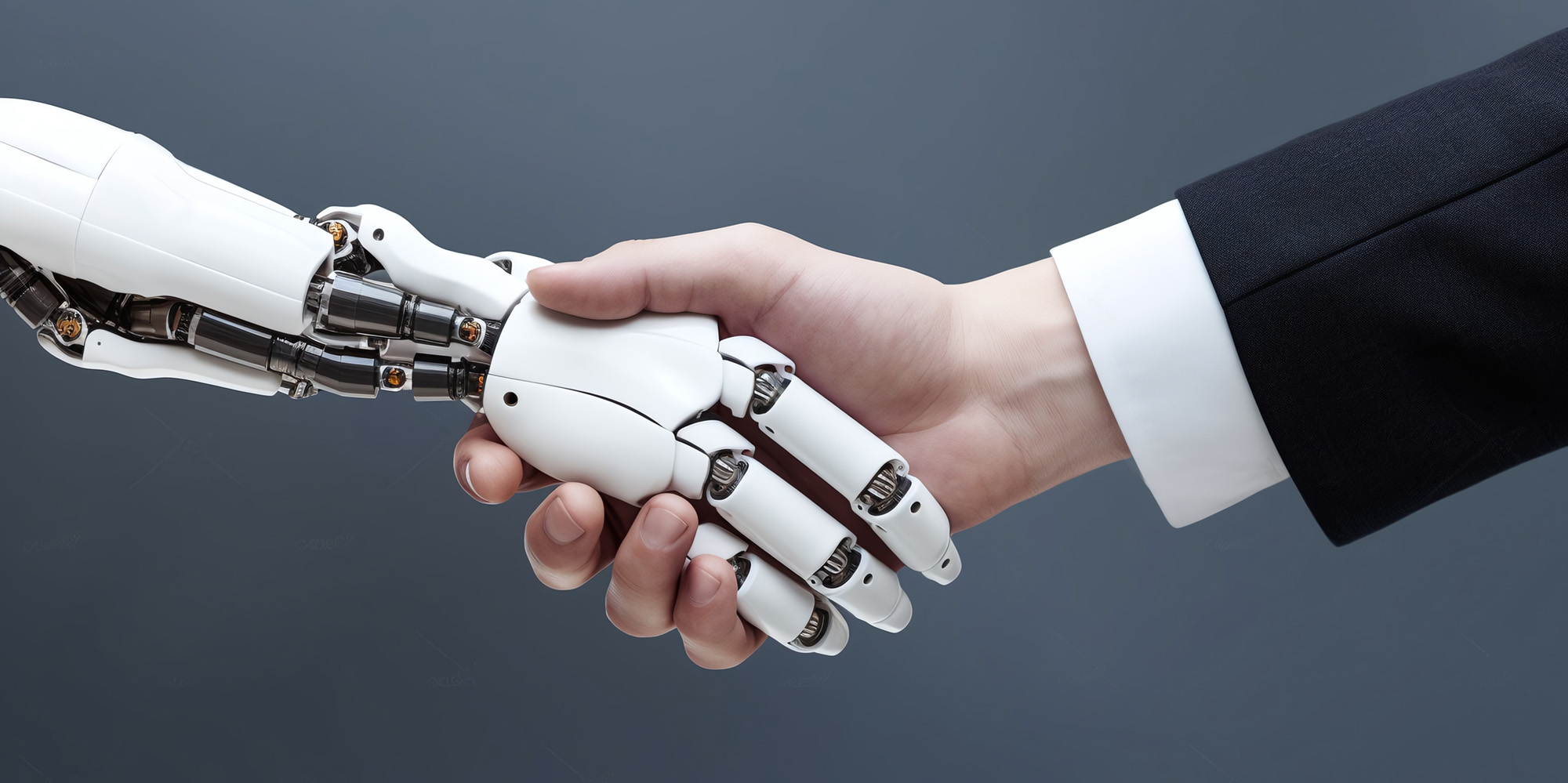
Future work models tend more toward "human-machine collaboration," with AI responsible for auxiliary analysis and execution, while humans focus on creative thinking and critical decision-making. This collaborative model can combine AI efficiency with human creativity, dramatically shortening work timelines, improving accuracy, saving enterprise labor costs, and ultimately producing more humanized product designs and services, achieving 1+1 greater than 2 effects.
What Role Can MaiAgent Play?
1. AI Assistant Development Platform
MaiAgent provides a complete AI assistant development platform supporting multiple large language models (LLM) and combining RAG (Retrieval-Augmented Generation) technology to ensure response accuracy and security. Enterprises can customize AI assistant roles through the platform, upload knowledge base materials, and integrate assistants into LINE, Messenger, corporate websites, and other conversational platforms, achieving multi-channel real-time interaction.
2. AI Customer Service Module
As a brand customer service bot, MaiAgent can help provide 24/7 year-round service supporting multiple languages with automatic customer semantic detection and correction. This not only improves internal team work efficiency but also increases customer satisfaction, ensuring immediate and accurate responses at any time.
3. Knowledge Base and FAQ Management
MaiAgent provides enterprise internal knowledge base and FAQ management functionality. Enterprises can upload various document formats (such as txt, docx, xlsx, json) to build proprietary knowledge bases. Through RAG technology, AI can quickly retrieve and understand information, providing accurate answers and improving knowledge management efficiency.
4. Response Quality Detection and Monitoring
To ensure AI assistant response quality, MaiAgent provides quality detection functionality for pre-launch testing, determining whether AI assistants meet standards. Simultaneously, after launch, it continuously monitors response quality and provides optimization suggestions. Enterprises can also customize scoring standards and SOPs for automatic system monitoring.
5. Deployment Plans and Customization Services
MaiAgent provides multiple plans including public cloud, private cloud, and on-premises deployment to meet different enterprise needs. Simultaneously, the platform provides professional AI consulting services, helping enterprises thoroughly clarify requirements, resolve AI Q&A issues, and provide customized development services ensuring seamless AI assistant integration with enterprise business processes, maximizing effectiveness.
Through these services, MaiAgent helps enterprises improve competitiveness in the AI era, achieving intelligent and automated business processes.