How much does one hour of production line downtime cost? Most manufacturing executives can answer instantly. Auto assembly lines can lose over a million NTD per hour; semiconductor fabs, tens of millions. Global manufacturing loses an estimated $50 billion annually to unplanned downtime. Equipment failures are inevitable. But the reactive mode of discovering a breakdown only after it happens can change.
The Daily Challenge for Field Engineers
Manufacturing maintenance faces a classic dilemma: you cannot know when equipment will fail, but you cannot wait until it does. Traditional scheduled maintenance services equipment on a fixed schedule regardless of actual condition. Some machines fail early and preventive maintenance arrives too late; others run fine and scheduled service wastes time and parts. Most critically, this model depends on senior engineers whose experience lives in their heads, not in systems. When they retire, that expertise goes with them.
How AI Agents Change This
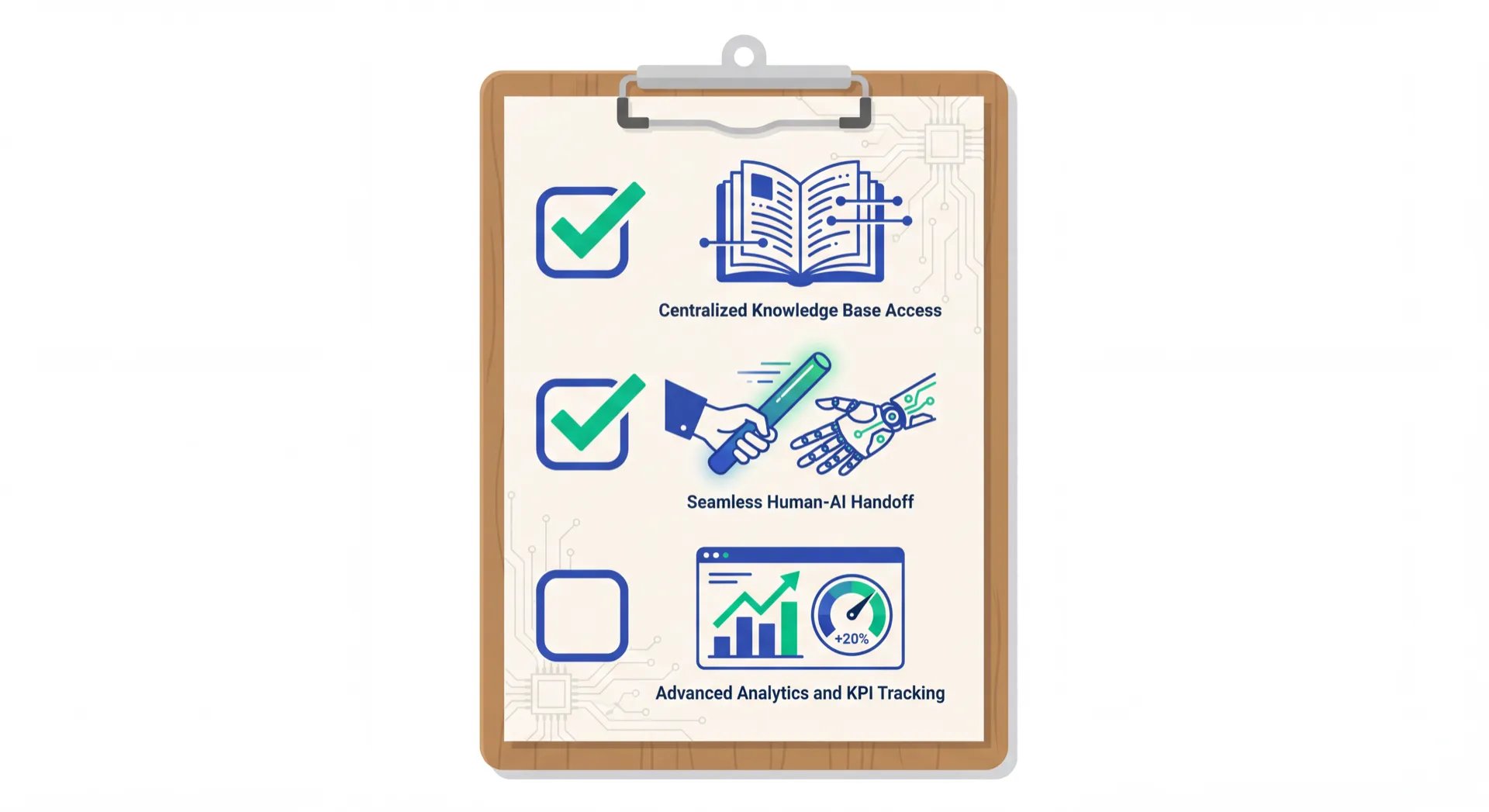
AI Agents address three things simultaneously in manufacturing maintenance.
1. Turn the Knowledge Base into an Always-Available Expert
Equipment manuals, SOPs, maintenance records, fault histories are scattered across systems in inconsistent formats. AI knowledge bases consolidate everything so engineers can ask natural-language questions: "What caused error code E-302 on CNC-07 last time? How was it fixed?"
In the MaiAgent x Advantech collaboration, factory engineers query equipment SOPs via mobile phone. Problem resolution time dropped 70% and user satisfaction exceeded 90%.
2. Predict Equipment Anomalies from Sensor Data
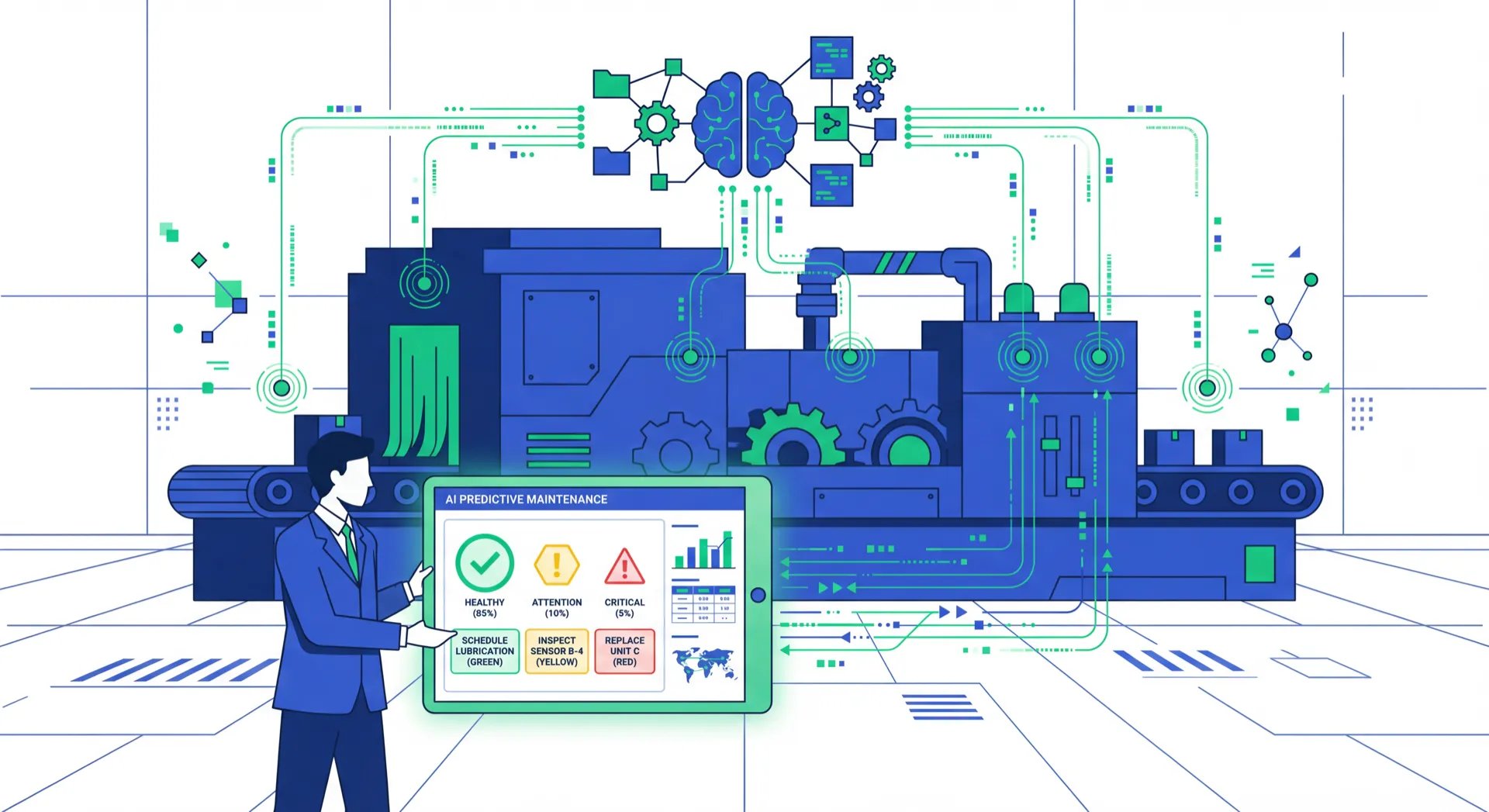
Modern factory equipment generates continuous vibration, temperature, pressure, and current data. Traditional rule-based monitoring only alerts after thresholds are exceeded—often too late. AI predictive maintenance learns each machine's normal patterns from historical data and issues warnings before anomalies become failures.
Siemens' Senseye added generative AI in 2024, letting operators understand equipment status through conversation. Global data shows predictive maintenance reduces downtime 30–50%, cuts maintenance costs 30%, and extends equipment life 20–40%.
3. Encode Experience into Executable Skills
When an engineer resolves a complex fault, that knowledge can be encapsulated as an Agent Skill. The next time any engineer encounters a similar fault code or symptom, the AI guides them through the entire resolution process—required tools, inspection items, sequence. This replicates your best engineers' expertise without depending on any individual.
A Three-Phase Implementation Path
Phase 1: Knowledge Base Launch (1–2 months)—Import equipment manuals, SOPs, and maintenance records so engineers can query with natural language. Start with the five highest-failure-frequency machines, validate, then expand.
Phase 2: Sensor Data Integration (2–4 months)—Connect IoT sensor data to the AI system and let it learn anomaly patterns. Choose the production line with the highest downtime cost as pilot—even 10% improvement produces compelling ROI.
Phase 3: Experience as Skills (ongoing)—As the AI accumulates fault resolution cases, encapsulate high-frequency scenarios as Agent Skills. This transitions maintenance capability from depending on individuals to depending on systems.
FAQ
What prerequisites does AI predictive maintenance require?
Equipment sensors with digitally collectible data, plus 3–6 months of historical operational data for the AI to learn normal patterns. Start with your most critical machines—full coverage is not required immediately.
Our SOPs are all paper-based. Can we still use an AI knowledge base?
Yes. Paper SOPs can be scanned and OCR-converted, then imported into the knowledge base. MaiAgent supports PDF, Word, scanned files, and more.
Will AI replace field engineers?
No. AI Agents assist—helping engineers find information faster, detect issues earlier, and standardize resolution processes. Actual judgment and operations remain with engineers.
References
MaiAgent x Advantech Case Study (−70% query time, 90%+ satisfaction)
Siemens — Generative AI Takes Predictive Maintenance to Next Level
A3 Automate — Industrial AI in Action: Predictive Maintenance (30–50% downtime reduction)