In September 2026, Anthropic, Google and OpenAI each shipped two rounds of new models within a single month. For companies that already run AI, every new release raises the same question. Does the knowledge base, and every setting built around the old model, have to be rebuilt?
The answer is to make the model swappable and leave everything else alone. The knowledge base, permissions, workflows and audit logs stay on the platform. When a new model comes out, the company picks it on top of the same assets, and no assistant has to be rebuilt. Model releases will not slow down. Multi-model switching is how a company keeps pace.
1. AI models now change weekly. Can companies keep up?
Release date | Model |
|---|---|
September 1 | Claude Fable 5.1 (Anthropic) |
September 2 | Gemini 3.8 Flash (Google) |
September 3 | GPT-6 Astra (OpenAI) |
September 22 | Claude Opus 5.5 (Anthropic) |
September 28 | Claude Sonnet 5.5 (Anthropic) |
September 29 | GPT-6.1 Sol (OpenAI) |
September 30 | Gemini 4 Argon (Google, currently limited to cyber-defense organizations) |
(Claude Mythos 5.1 and Gemini 3.8 Flash Cyber are restricted versions of existing models and are not counted. Gemini 4 Argon is a new model, currently limited to cyber-defense organizations.)
Seven new models in one month, with less than three weeks between the two rounds, and prices fell within the same month. OpenAI released GPT-6 Astra on September 3 at 10 US dollars per million input tokens and 50 US dollars per million output tokens. Twenty-six days later, GPT-6.1 Sol came out with similar capability at 2 US dollars for input and 10 US dollars for output. A company that can switch models gets the new price the day it appears.
Enterprise systems are planned in years. Models now change in weeks. Cleaning, chunking and loading a knowledge base takes months. So does getting permission and audit rules through security and compliance review. If the AI application is built on one model vendor's platform, changing the model means moving house. If you built it yourself you can switch, but every switch means tuning and testing again. Multi-model switching exists so a company does not pay that cost every time a model changes.
2. What is multi-model switching? The enterprise AI platform treats the model as a replaceable part
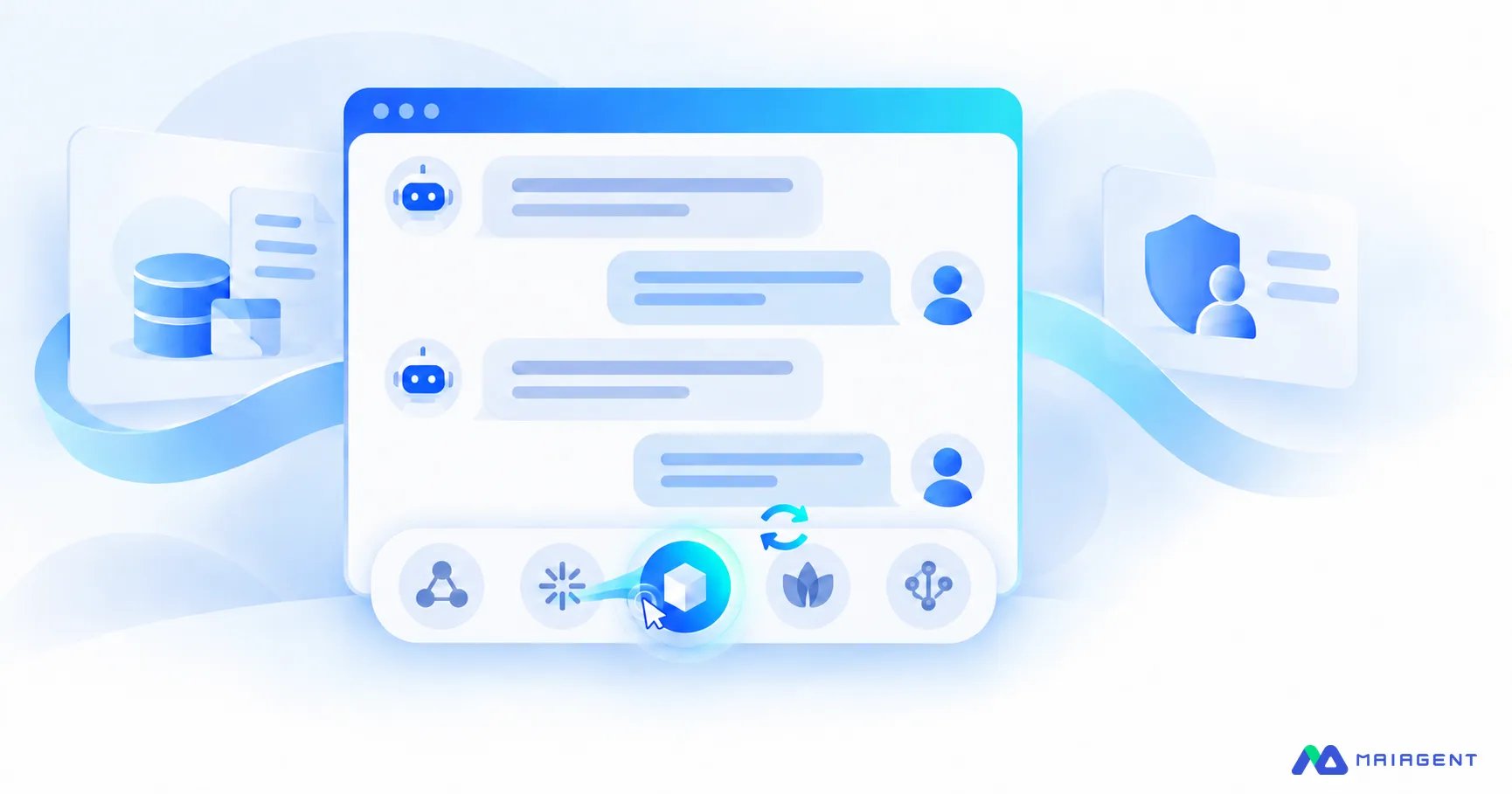
The idea is simple. The assistants, knowledge base, permissions, workflows and audit logs a company has built all live on the platform. The model is one option underneath. The platform handles the technical differences between vendors, so when the company changes the model, nothing else moves.
In practice, the same assistant can run on GPT-6 Astra this month and Claude Opus 5.5 next month. The knowledge base is not re-indexed, permissions are not reset, and past conversations are kept in full.
3. Enterprise AI governance cannot rely on the model's built-in guardrails. Permissions and audit must stay with the company
Keeping permission and audit rules outside the model is not only about easy switching. A vendor's built-in safety checks whether the model's own answers are safe. It does not know who inside your company may see which data, or what the AI is allowed to do. Two public test results from late September 2026 make the point. On September 29, OpenAI launched Dots, an AI agent that keeps running tasks in the background. In OpenAI's own tests, its permissions were changed 49 times mid-task, and 4 times it did not stop as the new permissions required. The same day, Anthropic published research showing that GLM-5.3, an open-weight model anyone can download and run, can have its refusal limits removed by changing model parameters, at a compute cost of about 1,200 US dollars. Both results say the same thing. The company has to define and keep its own permission and audit rules. It cannot lean on the model's built-in protection.
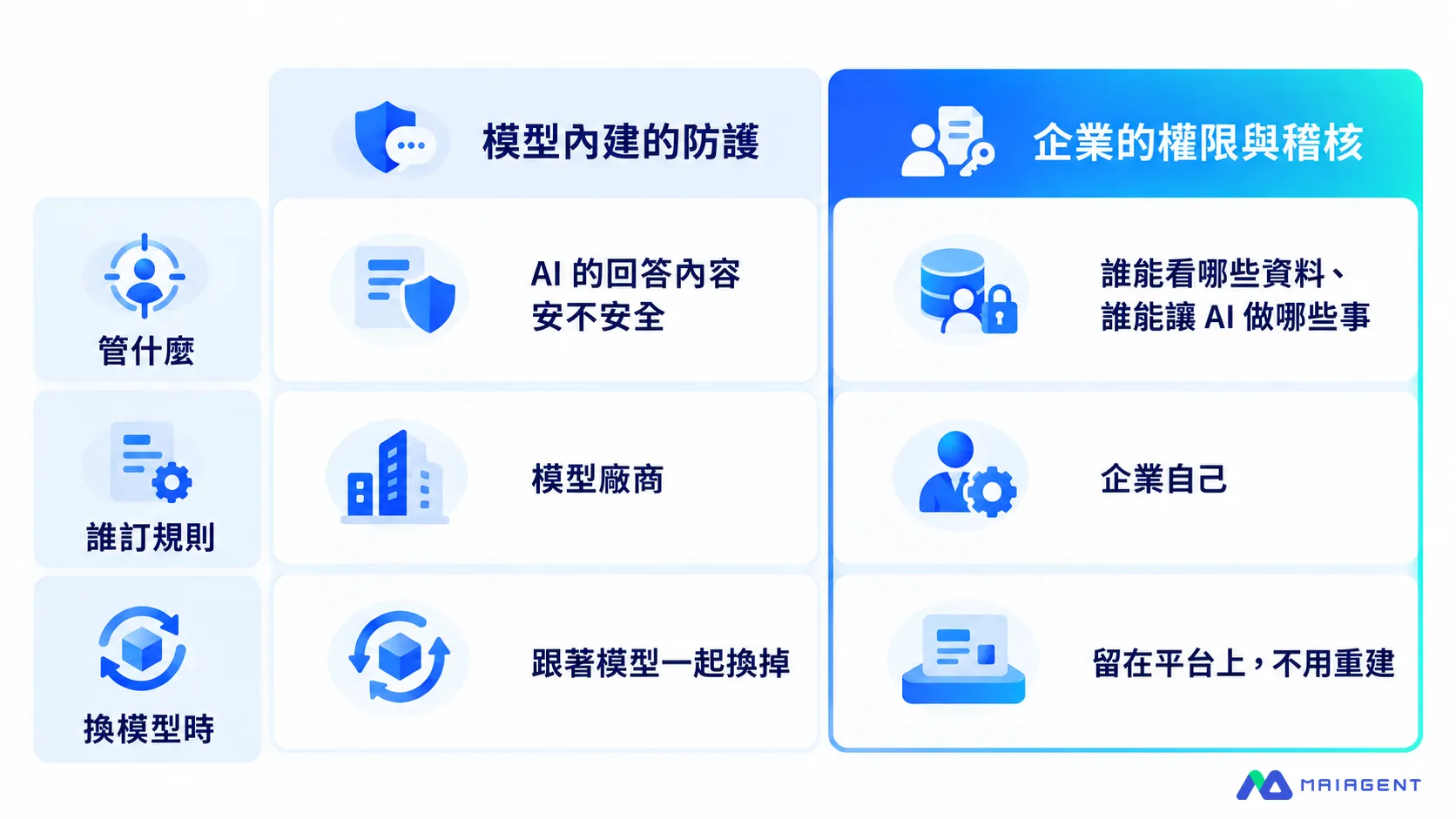
The industry is moving the same way. On September 28, NVIDIA open-sourced OpenShell, which splits agent control into four policy files covering files, network, processes and credentials. More than 100 organizations have joined. The new Microsoft Copilot lets IT set which model families each group may use. The Dutch government's self-built work environment, DAWO, treats AI as a replaceable component. IT defines the rules, IT keeps the records, and the model underneath can change at any time. That is what it means to keep enterprise AI governance outside the model. Sovereign AI is about the same thing. A company needs to stay in control of its AI. Where the model runs is part of it. Who holds the rules and the records matters more. Regulated industries can send sensitive data to an on-premises model and other work to a cloud model, with the same permission and audit rules on both sides.
4. How multi-model switching works in practice. How a company gets a new model the day it ships
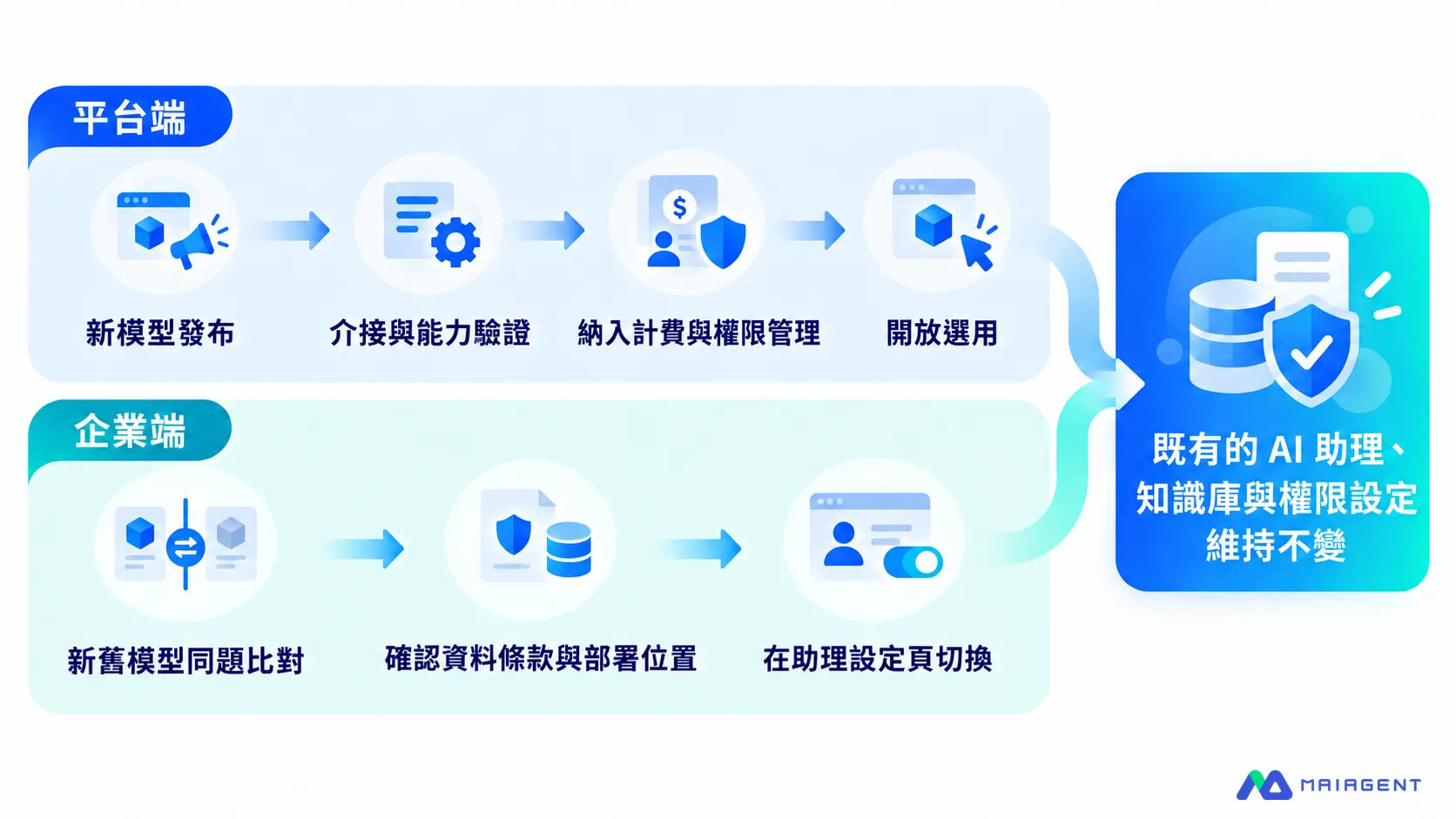
With rules and records in the company's hands, a new release leaves only the model itself to deal with. Take MaiAgent as an example. When a new model comes out, the platform connects it, checks its capabilities, adds it to billing and permission management, and then opens it to customers. Claude Fable 5.1, Gemini 3.8 Flash and GPT-6 Astra, all released in early September, are already available on MaiAgent. Companies can switch to any of them from the platform's model menu.
On the company side, the job is to check whether the new model fits the task. Run the same questions against the same knowledge base on the old and new model, compare answer quality and cost per call, then confirm the vendor's data terms and deployment location meet your regulations. Once it passes, change the model in the platform's model menu and you are done. Everything else on the platform stays as it is. Each assistant, built per department or task, can be set to its own model, and the same features and governance apply whether you run on SaaS, cloud, on-premises or hybrid cloud.
When you evaluate an enterprise AI platform, whether the model can be swapped is one item on the list. For how to choose, see the vendor criteria in Enterprise AI Readiness: 7 Factors Before You Deploy and the build-versus-buy comparison in The True Cost of DIY RAG for Enterprise AI.
5. Models will keep changing. Multi-model switching keeps you current and lets you use them
New models will keep arriving round after round, and most of them are options a company can use. When the model can be swapped and nothing else has to move, each new release only needs a check before the switch. You keep up with the pace, and you get to use the latest model.
To learn how MaiAgent runs in your environment, reach us through the contact form.
Frequently Asked Questions
1. Does a company need to commit to a single model vendor?
No. The platform supports models from several vendors. When a new one comes out, the company can test it and use it right away, and has a basis for comparison when negotiating price. The knowledge base and permissions do not move.
2. Does multi-model switching add cost?
It does not add platform cost. The only thing that changes is the token cost of the model itself, billed by the model you choose. Being able to switch is in fact a way to save. In September 2026 one vendor released a model with similar capability 26 days after the previous one, at one-fifth of the launch price. A company that can switch gets that price right away.
3. Does the knowledge base have to be rebuilt after a model change?
No. The knowledge base, permissions and workflows stay on the platform. On MaiAgent, changing the model leaves the existing assistants and knowledge base untouched.
4. How do you compare answer quality between two models?
Run the same set of questions against the same knowledge base on both models. Compare accuracy and cited sources question by question, then look at response time and cost per call.
5. Does a model change require a new security review?
Not a full one. Permission and audit rules sit outside the model, so only the new model itself needs checking, meaning answer quality, the vendor's data terms, deployment location and cost. Existing permissions, data scope, outbound connections and audit logs stay as they are.
6. After adopting AI, how should a company manage AI permissions and audit?
Permissions and audit do not travel with the model. The platform manages them in one place. Users keep their existing company accounts, each assistant gets its own data access and system permissions, and every exchange and action is logged. When the model changes, the rules do not have to be rebuilt.
References
Claude Fable 5.1 release (September 1, 2026), source arkeontech
Gemini 3.8 Flash release (September 2, 2026), source 9to5Google
GPT-6 Astra release (September 3, 2026), source DataNorth
Claude Opus 5.5 release (September 22, 2026), source Unite.AI
Claude Sonnet 5.5 release (September 28, 2026), source Anthropic
GPT-6.1 Sol release (September 29, 2026), source TechCrunch
Gemini 4 Argon release (September 30, 2026), source Google blog
OpenAI Dots permission tests, source Bank Info Security
Anthropic research on GLM-5.3, source Anthropic
NVIDIA OpenShell, source NVIDIA Newsroom
The new Microsoft Copilot, source Microsoft blog
Dutch government DAWO, source The Register